

The AI-Powered CFO: How Finance Leaders Are Evolving in the Age of Automation
TL;DR
Why the old model breaks
- Static forecasts freeze assumptions that are already outdated when boards review them.
- Fragmented models optimise individual functions while distorting enterprise strategy.
- Leadership debates outcomes without visibility into drivers, uncertainty, or trade offs.
What works better
- Treat finance as a reasoning system, not a reporting pipeline.
- Link forecasting, pricing, cash, and risk into shared scenarios with explicit assumptions.
- Use automation for execution, systems for synthesis, and humans for judgment and accountability.
Outcome: Faster board decisions, fewer capital allocation errors, clearer ownership of risk, and finance that actively shapes strategy instead of merely reporting it.
Introduction
For founders, boards, and operators, finance once answered a single question: what happened?AI shifts the question toward something far more consequential, namely which future the organisation is choosing to pursue.Forecasts now refresh continuously and scenarios regenerate on demand. Uncertainty no longer hides in footnotes or sensitivity tabs. When leadership reviews several plausible futures rather than one static plan, authority begins to move away from controlling process and toward interpreting meaning.
This matters because strategy now emerges from how the organisation reasons, not only from what it reports.In this shift, the CFO increasingly sits at the centre. Not as a technologist, but as the architect of how the enterprise thinks about capital, risk, and growth.
The Core Problem: What the Old Model Gets Wrong
Most finance functions still operate on a batch cadence. They close at month end, forecast quarterly, plan annually, and explain variance after the fact. This rhythm was built for slow feedback and stable markets.
AI now delivers signals continuously, yet leadership processes remain episodic. Decisions still wait for cycles that no longer match reality.
The cost is not only time or headcount. It is strategic distortion.
Capital is allocated on stale assumptions. Risks surface after they have already accumulated. Boards debate conclusions without seeing the mechanics behind them. Finance becomes faster at producing numbers, but weaker at shaping judgment.
Failure Modes: How the Status Quo Breaks in Practice
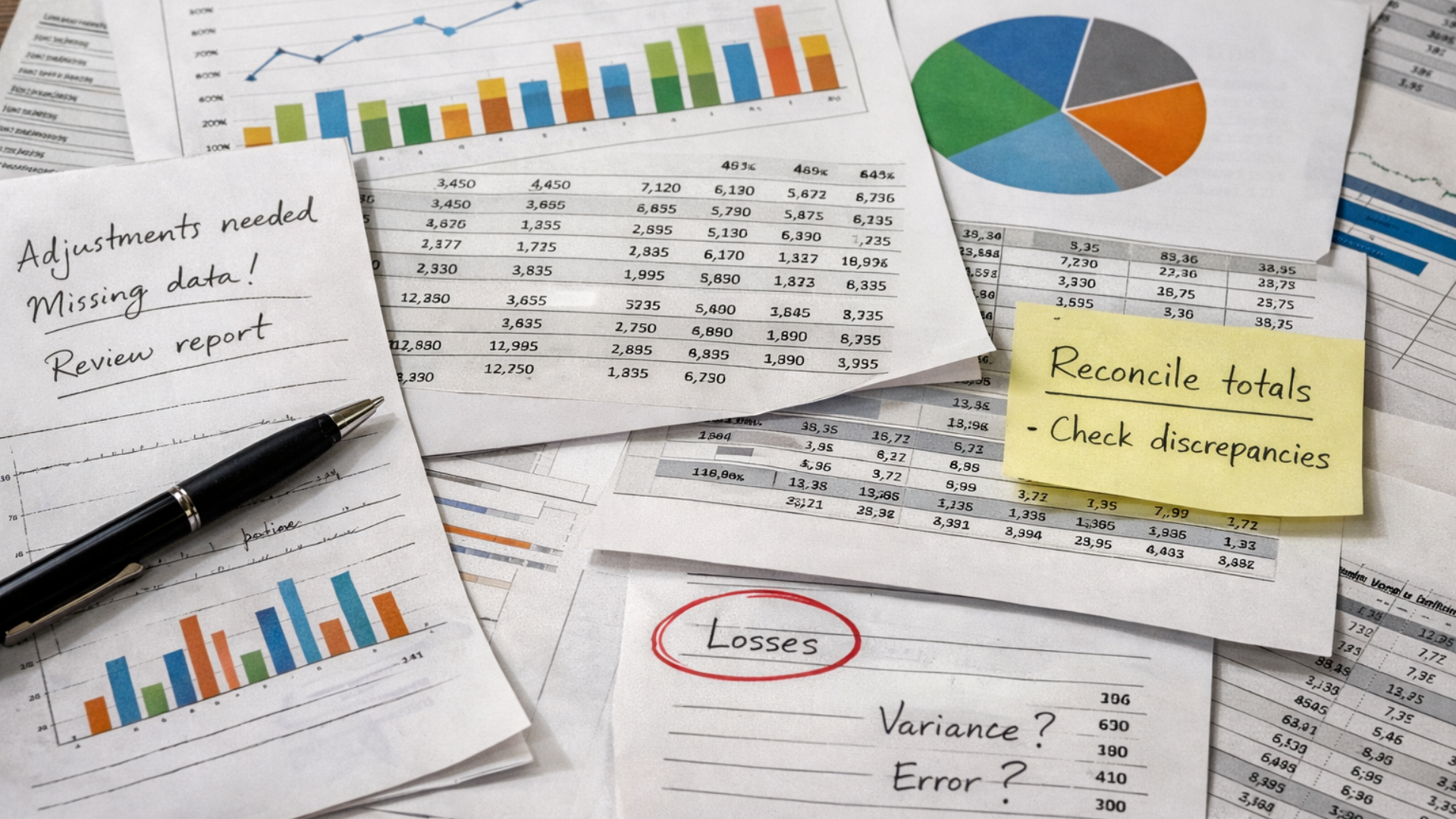
These failures rarely announce themselves as system problems. They surface quietly in meetings, board decks, and decisions that feel uncomfortable without being easy to diagnose.
The first crack often appears as version drift. Different teams arrive at the same board meeting with different numbers. Sales presents optimism based on pipeline momentum, finance brings caution anchored to cash, and operations arrives with a capacity plan built on last quarter’s assumptions. Each forecast is defensible, yet none are consistent. The meeting becomes a debate about whose numbers are correct instead of what the organisation should do next.
Local optimisation soon follows. Sales pushes volume to hit growth targets while operations throttles hiring to protect margins and finance restricts spend to preserve runway. Each function succeeds on its own metrics, but the enterprise drifts into a strategy no one consciously chose. Growth appears healthy on the surface, even as cash quietly weakens and risk accumulates out of sight.
Over time, this degenerates into reconciliation loops. Analysts spend weeks stitching spreadsheets, aligning drivers, repairing broken links, and reconciling conflicting assumptions. By the time a scenario is ready, the decision it was meant to inform has already moved on. Finance becomes a production line for decks rather than a design studio for decisions.
Assumptions then begin to shift silently. Growth rates update, churn curves move, pricing elasticity changes. These adjustments occur inside models without documentation, ownership, or review. Leadership debates outcomes without realising that the foundation underneath has quietly changed. Silent assumptions are among the most common sources of strategic error.When questions finally arise, there is often no audit trail. Few organisations can answer with confidence why last month’s forecast dropped, which driver moved it, or whether volume, price, mix, or cost was responsible. The reasoning has been overwritten by successive versions, leaving leaders with conclusions but no memory of how they were reached.
At the same time, decisions slow. Scenarios take weeks to assemble and reviews are scheduled too late. By the time projections reach the board, customer behaviour, FX rates, or competitive dynamics have already shifted. This decision latency quietly erodes advantage, leaving the organisation perpetually reacting to a world that no longer exists.
As pressure rises, narratives fracture. Product argues for investment based on roadmap momentum, sales for expansion based on bookings, and finance for restraint based on cash. Each function defends a different future. What looks like healthy debate often signals something more dangerous, namely that the organisation no longer shares a common model of reality.Eventually, confidence appears where caution should live. Forecasts arrive with precise numbers and polished charts, while uncertainty bands, sensitivities, and fragile edges remain hidden. Directors see clarity rather than volatility. This confidence without context is how boards approve strategies they would have rejected had uncertainty been visible.These failures are not rare. They appear in almost every scaling company. They are not caused by weak tools or poor analysts, but by trying to run fast moving businesses on systems designed for slow, periodic reasoning.
Why It Fails: Root Causes
The first driver is fragmented incentives. Each function is rewarded for optimising its own outcomes rather than enterprise performance. Individually rational decisions accumulate into strategies no one explicitly endorsed.
Human workflow imposes another limit. No leadership team can continuously integrate pricing, demand, cost, hiring, capital, and risk by hand. The cognitive load overwhelms even disciplined planning and gradually collapses it into episodic correction.Technology, rather than solving this, often reinforces the problem. Forecasting tools reason about volume, planning systems reason about headcount, cash models reason about liquidity, and control engines reason about risk. Each produces internally coherent answers, then exports them into spreadsheets where humans attempt manual reconciliation. Intelligence remains local while judgment stays fragmented.
Over time, accountability weakens. Assumptions lose owners, overrides accumulate without record, and models advise without clear responsibility for outcomes. When projections fail, leadership debates whether data, models, or managers are at fault. In practice, no one owns the reasoning itself.
Finally, distance emerges between leadership and logic. Executives review forecasts but rarely touch drivers. They approve scenarios without owning assumptions. Confidence becomes borrowed from systems they cannot fully interrogate. Strategy is shaped by models whose reasoning no one at the top truly controls.
The mechanism is simple. Prediction scales faster than judgment. Automation accelerates signals and multiplies scenarios, while the organisation’s capacity to align, interpret, and govern reasoning does not scale at the same pace. Without a shared reasoning layer, speed amplifies misalignment rather than clarity.
The Better Model: Finance as a Reasoning System

These failures persist not because organisations lack talent or technology, but because the structure of financial decision making has not evolved with the pace of information.
In a reasoning system, forecasting, pricing, hiring, cash, and risk are linked inside shared scenarios. Assumptions are explicit, owned, and auditable. Uncertainty is propagated rather than hidden. Automation executes, systems synthesise, and humans retain judgment where it matters most.
The CFO’s role shifts accordingly. Instead of managing reports, they design how the organisation reasons about capital, growth, and risk. Their primary asset becomes not the ledger, but the logic that connects strategy to outcomes.
Illustrative Example
Question
Should the company expand into Market B next quarter?
Inputs
Demand scenarios, pricing elasticity, hiring capacity, cash runway, funding timing, and covenant constraints.
Process
The system simulates revenue, margin, hiring, and liquidity together across three demand paths while recording all assumptions and propagating uncertainty into cash burn and capital needs.
Output
The base case breaks even in nine months with moderate cash draw. The upside becomes profitable in five months but risks a capacity bottleneck. The downside breaches liquidity in month seven without pricing adjustment.
Interpretation
Leadership enters with phased hiring, pre approved pricing flexibility, and an explicit downside trigger for pause.This is not prediction. It is disciplined decision design.
What This Unlocks
When finance becomes a reasoning system rather than a reporting pipeline, decision making changes in durable ways.The first effect is speed with relevance. Assumptions refresh continuously instead of quarterly, allowing leadership to revisit strategy as markets shift rather than waiting for the next cycle. Discussions move away from validating numbers and toward choosing actions that fit the current world.
Over time, this reduces capital mistakes. Leaders test investments across scenarios before money moves. Expansion plans surface their cash and risk consequences early. Bad bets are often avoided not through caution, but through better information.Accountability sharpens as assumptions become explicit and traceable. Leaders can see which growth rate drove which hiring plan and which pricing choice drove which margin outcome. Behaviour changes accordingly, with more careful review and fewer unexamined overrides.
Risk also changes character. Liquidity stress appears months earlier, margin compression surfaces while pricing can still adjust, and volatility becomes manageable rather than surprising. Earlier detection restores choice, even when outcomes remain uncertain.
Boards begin to align more easily. When directors see the same scenarios, drivers, and uncertainty, debate shifts from whose forecast is right to which future the organisation prefers to manage. Meetings shorten, friction declines, and strategic challenge improves.
Investors, in turn, gain confidence not from optimism but from transparency. Forecasts arrive with visible assumptions, documented sensitivities, and explicit uncertainty. Misses become explainable, surprises rarer, and trust compounds because reasoning is visible rather than implied.
The benefit is not speed alone. It is credibility at scale.
Wrapping Up
AI does not turn CFOs into technologists. It forces founders, boards, and operators to redesign how financial judgment is produced.
When forecasts regenerate, scenarios multiply, and agents act continuously, advantage comes from governing how the organisation reasons. Which assumptions anchor planning. Which uncertainties surface. Which trade offs are debated before capital moves.
he CFO no longer manages the ledger. They manage the map.
Rules of thumb
Never approve a plan you cannot regenerate from assumptions.
Link growth, pricing, and cash before debating expansion.
Treat assumptions as assets rather than footnotes.
Automate execution, not strategic judgment.
Make uncertainty explicit before making commitments.
What to do next this week
Pick one board level decision currently driven by a single forecast. List its top assumptions and owners. Link it explicitly to cash and runway. Add one downside scenario and debate it with your leadership team.That is how finance stops reporting the past and starts shaping the future.